
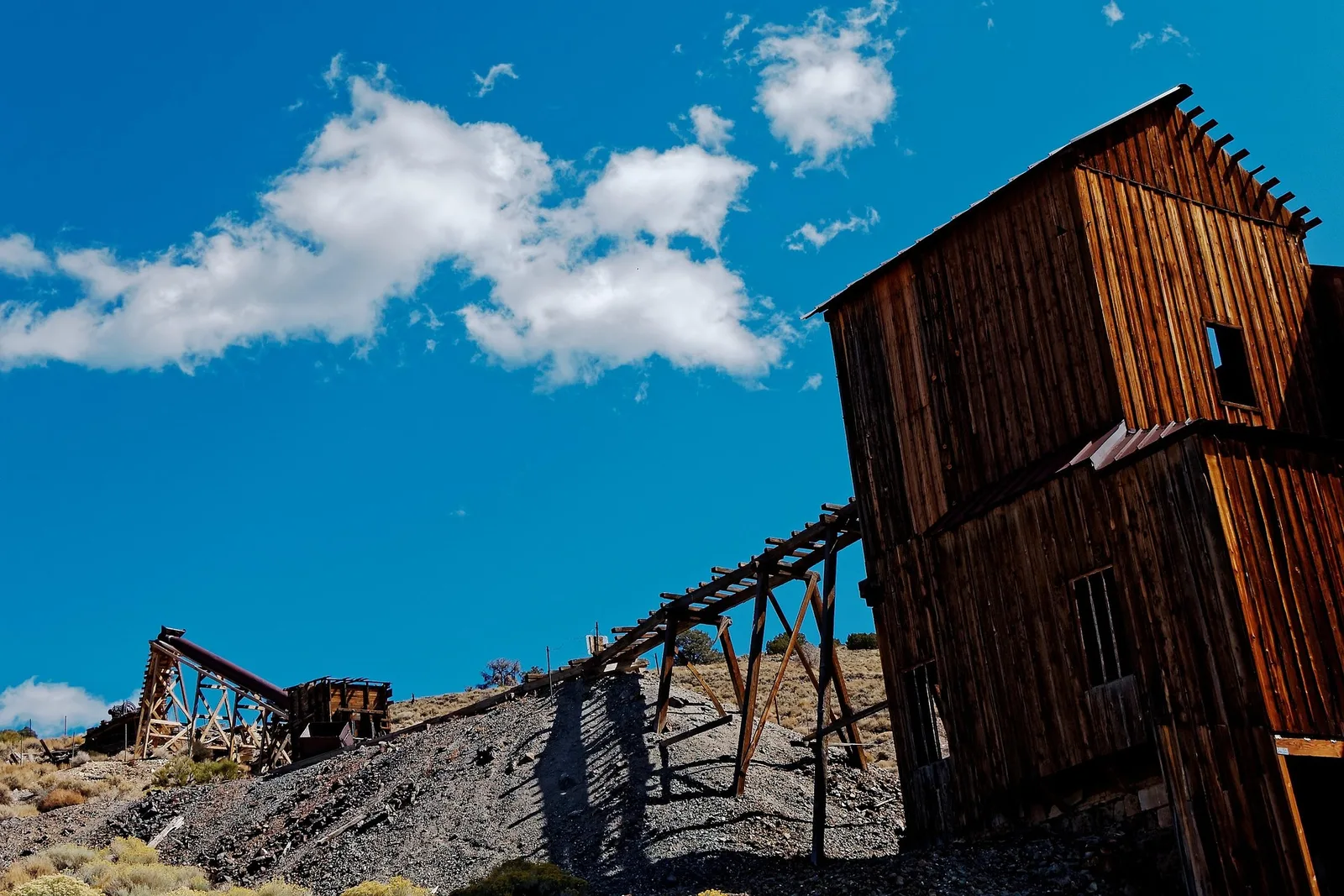
The Short Answer
Nevada gets called the best state for mining claims for reasons that actually hold up: more open federal ground than anywhere else in the country outside Alaska, geology that has made it the dominant gold-producing state for decades running, and a state tax structure built around what a mine actually earns rather than what it pulls out of the ground. None of that means every claim in Nevada is a winner. It means the odds, the infrastructure, and the regulatory environment all lean in a prospector's favor more than they do almost anywhere else.
It Starts With How Much Ground Is Actually Open
Nevada's federal land footprint is genuinely unusual. BLM alone manages nearly 48 million acres in the state, close to 63 percent of Nevada's entire land base, more than any other single agency controls in any other state in the Lower 48. Layer in U.S. Forest Service, Fish and Wildlife Service, National Park Service, and Department of Defense holdings, and the federal government owns roughly 80 percent of Nevada outright, the highest share of any state in the country. That matters directly for mining claims, because claims can only be located on federal land where the minerals haven't been withdrawn from mineral entry. A state that's mostly federal ground, and mostly still open to it, simply has more room to stake than a state where most of the land was privatized generations ago.
The Claim Numbers Back It Up Too
Land availability and geology aren't just theoretical advantages; they show up directly in how many claims are actually staked. Nevada carries more than 270,000 active mining claims on BLM's own books, which is roughly 47 percent, close to half, of every active claim on BLM land nationwide, spread across every other state combined. No other state comes remotely close. That single number is a fair proxy for everything the rest of this article is describing: land, geology, and regulatory climate all pointing the same direction at once, and prospectors and companies responding to it by actually staking ground there in numbers no other state matches.
The Geology Actually Backs It Up
Land availability alone wouldn't matter if there weren't anything worth finding underneath it. Nevada has produced somewhere around two-thirds to three-quarters of all domestic gold in most recent years, according to U.S. Geological Survey production data, making it the leading gold-producing state in the country by a wide margin, with Alaska a distant second. A single district, the Carlin Trend in northeastern Nevada, has produced more than 50 million troy ounces of gold since large-scale mining began there, and the open-pit, cyanide heap-leach method pioneered along that trend is now used at low-grade gold mines around the world. The state's reputation for being mining-friendly tracks directly back to how much gold is actually in the ground.
A Tax Structure Built Around Net, Not Gross
Nevada taxes mining production through what's called the net proceeds of minerals tax, assessed on what's left after legitimate operating costs are deducted, not on the raw value of everything pulled out of the ground. The rate scales with profitability, roughly 2 to 5 percent depending on the ratio of net to gross proceeds, capped at 5 percent by the state constitution. That's a meaningfully different structure than a flat severance tax or gross-value royalty, which some other mining states impose regardless of whether an operation is actually turning a profit that year. A tax tied to net proceeds doesn't punish a marginal operation the same way a flat gross tax would, and that's a real, structural reason the state gets cited as favorable, not just a talking point.
The Industry Itself Keeps Ranking Nevada This Way
Outside surveys back this up too. The Fraser Institute's Annual Survey of Mining Companies, an industry perception survey that polls exploration and mining executives on permitting, taxation, regulatory clarity, and overall governance, ranked Nevada the top mining investment jurisdiction in the world in its most recent edition, ahead of every country and every other state or province surveyed. It's worth being clear about what that survey actually is: an opinion poll of industry executives, not a government ranking or a measure of geological potential on its own. But when the people actually running exploration budgets consistently rate a place highly year after year, that's a real signal about how the permitting and regulatory environment functions in practice, not just on paper.
What "Best Jurisdiction" Doesn't Mean
None of this means staking a claim in Nevada is easy, or that a favorable jurisdiction guarantees a favorable claim. Federal surface management rules still apply in full: reclamation requirements, water rights, a genuinely serious constraint in a desert state, and the same annual maintenance fee or assessment work every claim holder nationwide has to keep up with. A high statewide gold-production number says nothing about whether a specific 20-acre parcel actually holds anything worth extracting. Nevada has plenty of ground that's been staked, worked, and abandoned without ever paying off. "Best jurisdiction" is a statement about the overall odds and the operating environment, not a guarantee about any one claim.
The Practical Upshot If You're Choosing Where to Prospect
More open ground, more active mining infrastructure, and more established districts add up to real, practical advantages beyond just favorable statistics: existing roads into remote country, assay labs and equipment suppliers that don't require a long drive out of state, and a deep well of public geological data built up over more than a century of active mining. The tradeoff is competition. Well-known districts near existing production get prospected hard, and the easiest, most obvious ground has often already been staked by someone else. Nevada's advantage comes from the whole system, land availability, geology, tax structure, and the state's own regulatory track record, being built around mining actually happening, rather than tolerated as an afterthought, not from being undiscovered ground.
The Bottom Line
Nevada earns its reputation from three things stacking on top of each other: more open federal land than almost any other state, geology that has made it the country's dominant gold producer for decades, and a tax and regulatory structure the mining industry itself consistently rates as the best in the world. That combination is real and well documented. It's also not a substitute for doing the actual work of checking whether a specific piece of ground is open, and worth the trip.