
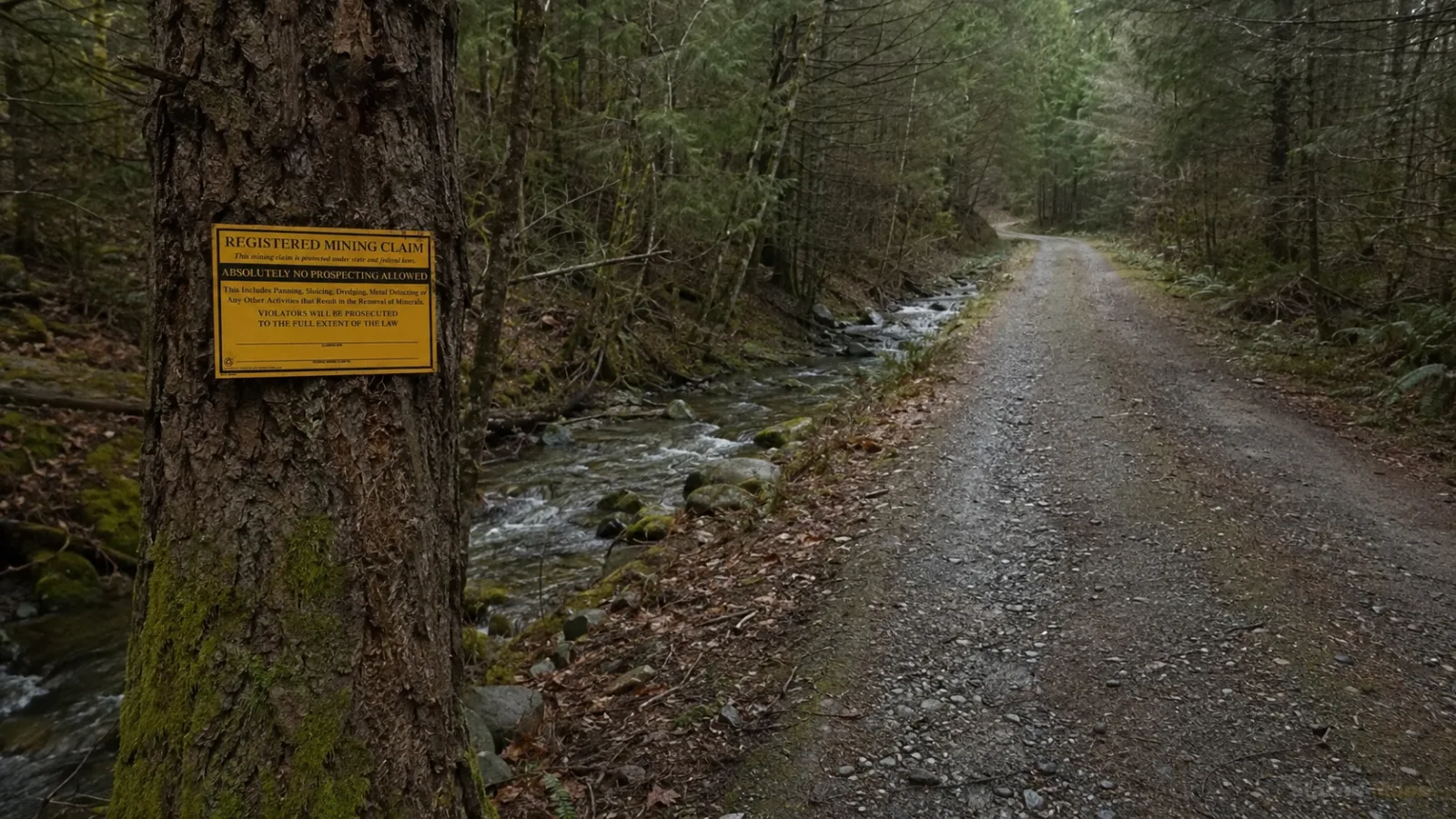
The Short Answer
A mining claim can last indefinitely. There's no expiration date built into the claim itself. But it only stays alive as long as the holder keeps up with one of two annual requirements: paying BLM's maintenance fee, or, for those who qualify, performing real assessment work and formally filing proof of it. Miss either one, and the claim goes void, whether or not anyone actually meant to abandon it.
The Default Rule: Pay the Fee
Most claim holders satisfy this with a straightforward annual payment. The maintenance fee is due on or before September 1 every year, currently $200 per lode claim, mill site, or tunnel site, and $200 for every 20 acres on a placer claim. Paying it in full and on time is what keeps the vast majority of claims in good standing. It substitutes entirely for the older requirement of doing physical work on the ground every year.
The Small Miner's Waiver
If a claimant holds 10 or fewer non-closed claims or sites nationwide, they can skip the fee, but only by doing the classic version instead: performing at least $100 worth of labor or improvements on each claim, and formally recording proof of that work with BLM. The paperwork side of this is specific. Claiming the waiver itself means filing BLM Form 3830-002 by September 1, and then documenting the actual work with an Affidavit of Annual Assessment Work, BLM Form 3830-004, along with a $15 per-claim processing fee, by December 30 of the same year. This is the "assessment work" people picture when they think of historically holding a claim through physical labor, but it only counts if it's documented on the right form and filed on time. Work nobody records with BLM doesn't satisfy the requirement, no matter how real the labor was.
What Happens If You Miss It
There's no grace period and no reminder notice. If the fee isn't paid, or the waiver work isn't performed and filed, by the deadline, the claim becomes void automatically. This is the exact mechanism behind almost every "historical" claim you'll come across: not usually a deliberate abandonment, but an administrative lapse. A missed payment one year is enough, regardless of how much time, money, or work went into the claim before that.
It plays out in ordinary ways more often than anything dramatic: a claimant moves, a piece of mail gets missed, a payment gets sent a week late without realizing the deadline is a hard cutoff rather than a suggestion. None of that changes the outcome. BLM doesn't evaluate intent or circumstances. The claim's status is simply a function of whether the paperwork and payment landed on time, every single year, without exception.
A Worked Example
Say a claim gets staked and filed in March 2020. The holder pays the $200 annual maintenance fee every September from 2020 through 2024 without issue: the claim stays active that whole time, five years running. In 2025, a change of address means the payment reminder never arrives, and September 1 passes with nothing filed. There's no phone call, no second notice. The claim is void as of that date, and by early 2026 it shows up as historical on BLM's own records, open to the next person who wants to locate it. Five years of otherwise-perfect standing didn't buy any cushion. One missed deadline was the entire difference between an active claim and open ground.
Can You Restake Ground After a Claim Goes Void?
Yes. Once a claim is void, the ground it covered becomes open to mineral entry again, available to whoever locates it next on a first-come basis, exactly as if it had never been claimed. This is precisely why checking current status before you invest any time driving out to a spot matters as much as checking whether it's claimed in the first place. "Claimed at some point" and "claimed right now" are very different facts, and only one of them tells you whether the ground is actually open.
Fees Adjust Over Time
Federal law requires BLM to adjust these fees every five years to reflect changes in the Consumer Price Index, so the exact dollar figures shift periodically. Always confirm the current amount directly with BLM before paying rather than relying on a number from an old source.
Why "How Long" Doesn't Have a Simple Answer
Duration isn't really about age. It's about unbroken compliance. A claim staked in the 1980s can still be fully active today if every single annual payment was made without exception. A claim staked eighteen months ago can already be void if this year's payment was missed once. There's no partial credit and no reset. One missed year is the whole story.
This is also why claim age is a poor proxy for claim strength. An old claim isn't inherently more "established" than a new one in any legal sense. Its only advantage is a longer track record of someone actually keeping up with the paperwork. A brand-new claim held in perfect standing is exactly as valid as a forty-year-old one held in perfect standing. What matters is this year's filing, not the claim's history.
What This Means If You're Searching for Open Ground
This is exactly why recently lapsed claims are often worth a closer look rather than skipping past them: the ground was staked in the first place because someone thought it was worth working, and the reason it's open again is usually a missed payment, not the deposit turning out to be worthless. The catch is that you need a way to see when a claim's status actually changed, not just whether it was claimed at some point in the past, which is exactly the gap between an old reference map and a system that reflects current status.